
The Paper Pod
Short audio summaries of selected clinical papers. Each episode links to the original publication.
Audio and written summaries are generated with AI. Check the original paper before relying on them.
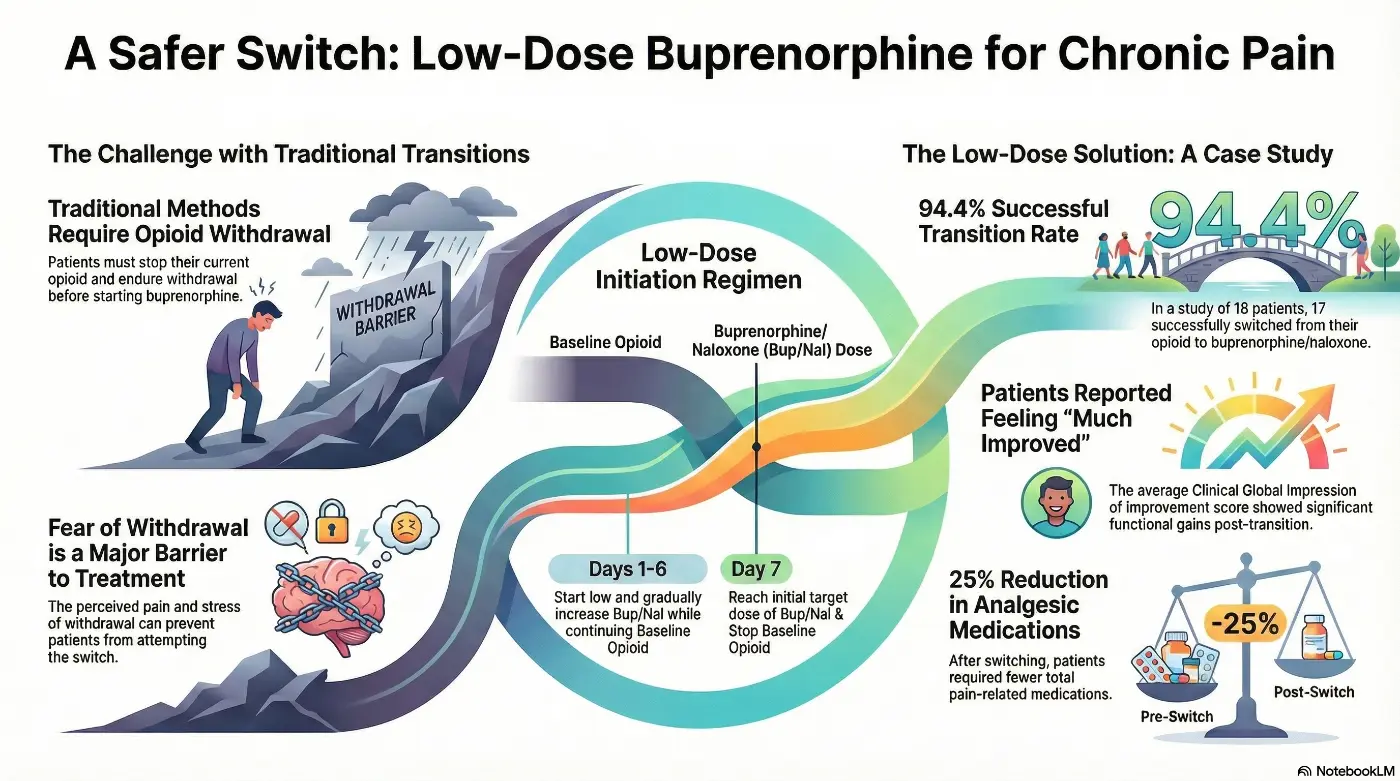
This 2024 retrospective case series, published in the Canadian Journal of Pain, examines the use of an alternative induction method for treating individuals with chronic non-cancer pain (CNCP). The purpose of the study was to evaluate the feasibility of low-dose buprenorphine/naloxone initiation, also known as microdosing, which avoids the moderate opioid withdrawal symptoms required by traditional transition protocols for patients on long-term full opioid agonist therapy. The researchers detailed the experiences of 18 patients from a Canadian chronic pain clinic who underwent this flexible, individualized low-dose regimen. Findings revealed that 94.4% of the patients successfully completed the switch to buprenorphine/naloxone, and while adverse effects like nausea were common, they were typically resolved once maintenance doses were established. The authors conclude that this method is an effective and adaptable approach for transitioning patients with CNCP off high-dose opioids without causing major complications or worsening their pain.
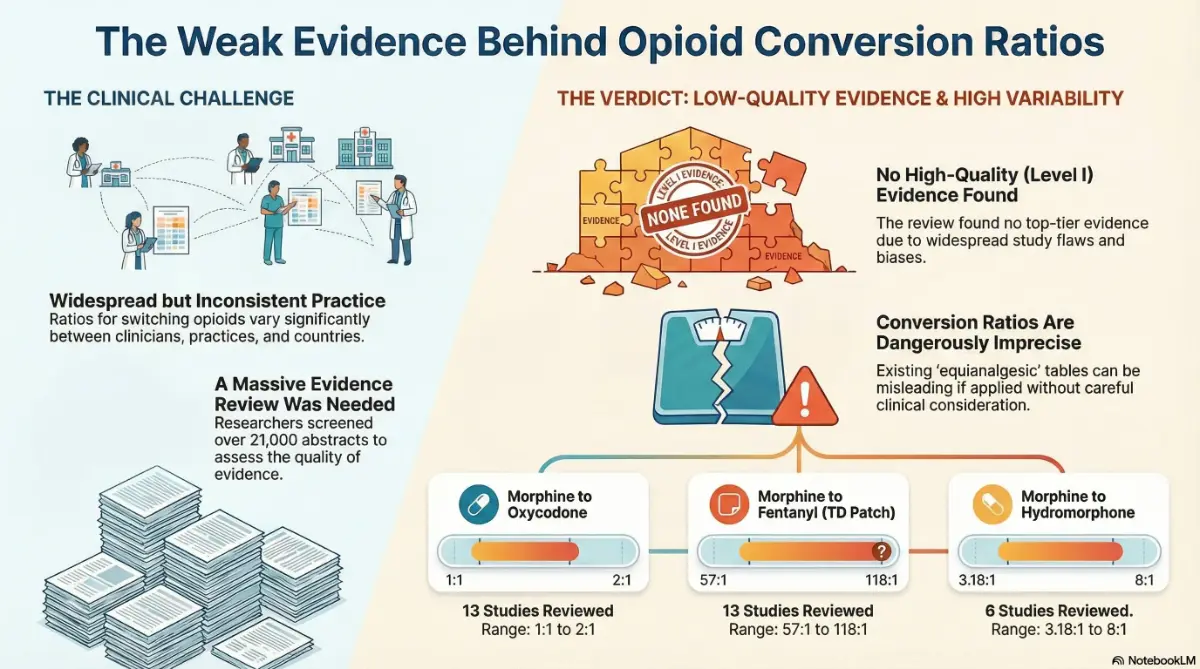
This academic article presents an exhaustive scoping systematic review of existing studies concerning opioid analgesic dose and route conversion ratios, a complex practice frequently necessary for managing acute and chronic pain. The authors performed this review to gather comprehensive, foundational data for creating an international eDelphi guideline, acknowledging the current, widespread inconsistency of conversion ratios among global clinical practices. Despite the massive scale of the search, which identified over 200 eligible clinical trials, the study ultimately confirmed a pervasive lack of high-quality evidence to support most standard conversion guidelines for oral, transdermal, and parenteral opioids. The review attributes this variability to significant limitations in study design, including issues with blinding, small sample sizes, and inconsistent consideration of opioid pharmacokinetics. Ultimately, the findings emphasize the urgent need for better-designed, prospective research to ensure safer and more precise patient conversion and rotation between different analgesic drugs.