
Listen
A short audio summary of the paper
Generated with AI. Check the original paper before relying on this summary.
Clinical Bottom Line
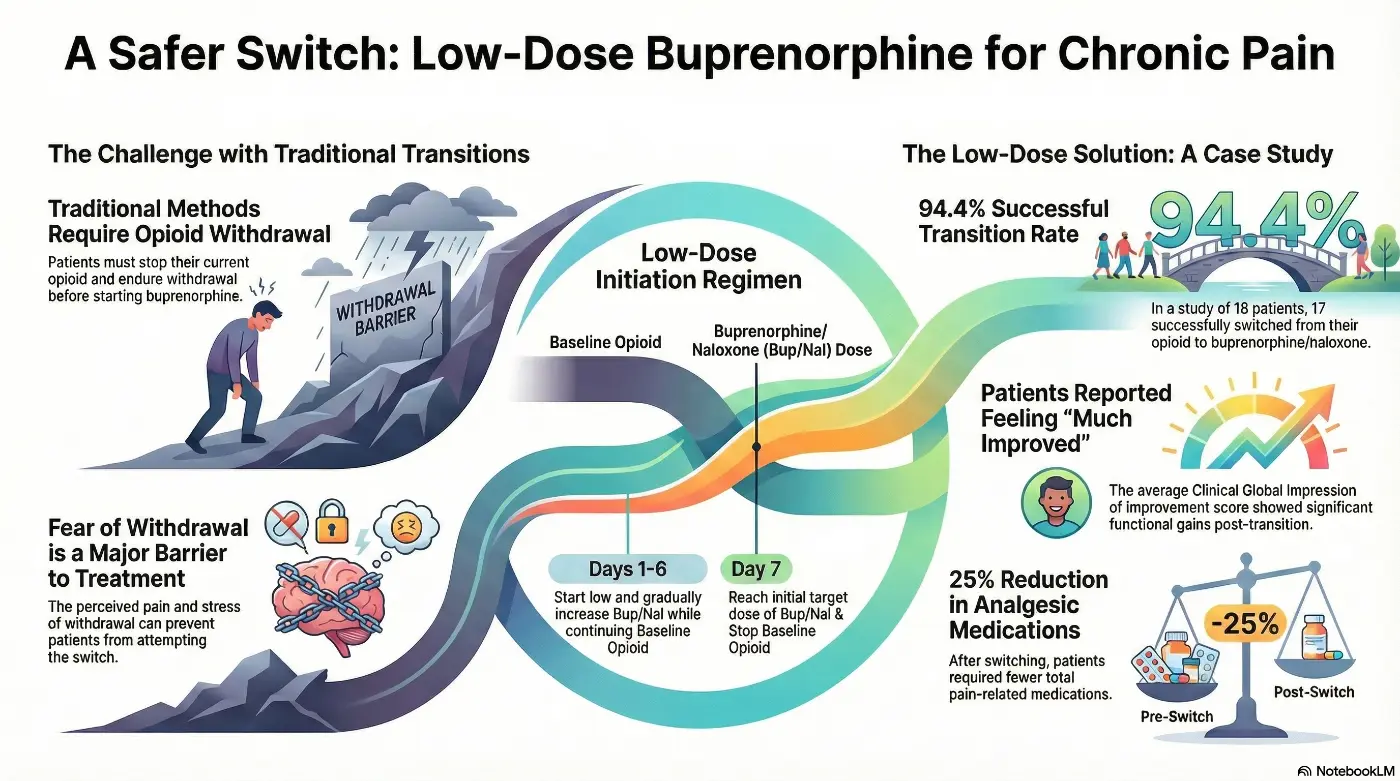
Traditional buprenorphine induction requires patients to be in moderate opioid withdrawal before starting treatment—a significant barrier for patients on long-term, high-dose opioid therapy. This study demonstrates that low-dose initiation (microdosing) offers a gentler alternative with high success rates.
Key Findings
- High Success Rate: 94.4% of patients (17 of 18) successfully completed the transition to buprenorphine/naloxone maintenance therapy.
- Flexible Protocol: The low-dose approach was individualized based on patient response, allowing for adjustments without precipitating severe withdrawal.
- Manageable Side Effects: While adverse effects such as nausea were common during the transition, they typically resolved once stable maintenance doses were achieved.
- No Withdrawal Crisis: Unlike traditional induction, patients did not need to endure moderate withdrawal symptoms before starting buprenorphine.
Clinical Takeaway
"Microdosing buprenorphine offers a patient-centered approach to transitioning individuals with chronic non-cancer pain off high-dose opioids. By avoiding the withdrawal requirement of traditional induction, this method may improve patient acceptance and completion rates for buprenorphine therapy."
Important
This audio and written summary was generated with AI for educational use. It is not medical advice. Check the original paper and use professional judgement.